
When a student has a specific country or university in mind, the Global Access charter covers the full-fee destinations they ask about most. This guide summarises each one: what it is known for, when the intakes fall, the visa route, and how long graduates can stay on to work.

United Kingdom
The UK combines globally respected degrees with a clear post-study work pathway.
- Intakes
- September, January, May
- Cost
- Tuition is £15,000–35,000/yr overall (undergraduate £15,000–30,000/yr, postgraduate taught £16,000–35,000/yr), with maintenance funds of £13,347 (London) or £10,224 (outside London) for 9 months and an Immigration Health Surcharge of £776/yr. Estimated cost of living is ~£1,300/month, with students typically needing £1,100–1,500/month.
- Visa
- Students need a CAS (Confirmation of Acceptance for Studies) from their university, proof of tuition plus maintenance funds held for 28 consecutive days, payment of the Immigration Health Surcharge, and completion of the Student visa application with biometrics at a VFS appointment.
- Language
- English is the language of instruction throughout. Bachelor's applicants need IELTS 6.0–6.5 (UKVI) or equivalent SELT, while master's applicants need IELTS 6.5 (typically 6.0 in each band).
- Work rights
- The Graduate Route currently offers 2 years of post-study work (3 years for PhD graduates), reducing from January 2027 to 18 months for bachelor's and taught master's graduates. Students may work up to 20 hours a week during term time and full-time in holidays, and can later switch to a Skilled Worker visa with a qualifying job offer.

United States
The USA offers the world's largest choice of universities and a STEM work pathway of up to 3 years.
- Intakes
- Fall (Aug/Sep), Spring (Jan), Summer
- Cost
- Indicative tuition is $28,000–80,000/yr overall, broken down as: Undergraduate (public, international) $28,000–45,000/yr, Undergraduate (private) $50,000–80,000/yr, Postgraduate/Master's $30,000–70,000/yr, and Community college $10,000–20,000/yr. Proof of funds (I-20) must cover the full annual cost, and estimated monthly cost of living is ~$1,500–2,500.
- Visa
- The F-1 visa process involves accepting your offer to receive the Form I-20, paying the I-901 SEVIS fee, completing the DS-160 form, paying the visa fee and scheduling an appointment, and attending an F-1 visa interview at a US consulate. Applicants must show funds covering the full tuition and living costs listed on the I-20.
- Language
- For bachelor's admission, SAT/ACT (where required) and TOEFL 80+ / IELTS 6.5 are required; for master's admission, GRE/GMAT are required for many programmes along with TOEFL 90+ / IELTS 6.5–7.0.
- Work rights
- F-1 students can work 20 hours a week on campus during term, use CPT for internships during study, and access OPT for 12 months of post-study work in their field, plus an additional 24 months under STEM OPT for STEM graduates (36 months total).

Canada
Canada offers world-class education with a clear path to work and settlement.
- Intakes
- September, January, May
- Cost
- Tuition is CAD 15,000–35,000/yr (undergraduate), CAD 17,000–45,000+/yr (postgraduate) and CAD 13,000–22,000/yr (colleges/diplomas), with a GIC of CAD 20,635 and an updated living-cost proof figure of CAD 22,895/yr. Estimated cost of living is ~CAD 1,900/month, with students typically needing CAD 1,700–2,200/month.
- Visa
- Students need a Letter of Acceptance (and a Provincial/Territorial Attestation Letter where required), a GIC or verified proof of funds (CAD 22,895), and must complete the study permit application on the IRCC portal with biometrics at a VFS centre and any required medical exam. From 2026, master's and doctoral students at public institutions are exempt from the study-permit cap.
- Language
- Bachelor's applicants need IELTS 6.0–6.5 / TOEFL / PTE, while master's applicants need IELTS 6.5, with GRE/GMAT required for some programmes.
- Work rights
- The Post-Graduation Work Permit (PGWP) offers up to 3 years of post-study work, with master's graduates getting 3 years; Express Entry provides a route towards permanent residence. Students may work up to 24 hours a week off-campus during study terms, and co-op programmes offer paid work placements during study.

Australia
Australia combines world-ranked degrees with generous post-study work rights.
- Intakes
- February, July, November
- Cost
- Tuition is AUD 20,000–45,000/yr (undergraduate), AUD 22,000–50,000/yr (postgraduate) and AUD 8,000–22,000/yr (vocational/VET), with mandatory OSHC of AUD 500–700/yr and a living proof-of-funds figure of AUD 29,710/yr. Estimated cost of living is ~AUD 2,400/month, with students typically needing AUD 2,200–2,800/month.
- Visa
- Students need a Confirmation of Enrolment (CoE), a Genuine Student (GS) statement and documents, proof of funds covering tuition, travel and AUD 29,710 in living costs, and Overseas Student Health Cover (OSHC), before lodging the subclass 500 student visa application online. The 485 graduate-visa fee rose to AUD 4,600 from March 2026.
- Language
- English is the language of instruction throughout. Bachelor's applicants need IELTS 6.0–6.5 / TOEFL / PTE and must meet the Genuine Student (GS) requirement, while master's applicants need IELTS 6.5 with no band below 6.0 (plus relevant work experience for some MBA courses).
- Work rights
- The Temporary Graduate (485) visa offers 2–3 years of post-study work, longer for research and regional study, with a Regional Bonus giving additional post-study time for regional study, and Skilled Migration providing a pathway towards permanent residence. Students may work up to 48 hours per fortnight during study and full-time during breaks.

Ireland
Ireland blends globally recognised degrees with a clear graduate work pathway inside the EU.
- Intakes
- September, January, Rolling
- Cost
- Non-EU tuition is €9,850–25,000/yr (undergraduate) and €10,000–35,000/yr (postgraduate taught), with proof of funds required at ~€10,000/yr. Estimated cost of living is ~€1,000/month, with students typically needing €1,000–1,300/month.
- Visa
- Students need to accept their offer and pay a tuition deposit, show proof of funds (~€10,000), arrange private medical insurance, complete the Irish student (Study) visa application with documents and biometrics submitted at a VFS centre, and register for an Irish Residence Permit (IRP) after arrival.
- Language
- English is the language of instruction throughout. Bachelor's applicants need IELTS 6.0–6.5 / TOEFL or equivalent, while master's applicants need IELTS 6.5 with no band below 6.0.
- Work rights
- The Third Level Graduate Scheme allows students to stay to seek work for 12 months (Level 8) or 24 months (Level 9/10), with a Critical Skills Permit available as a fast-track route for in-demand roles. Students may work 20 hours a week in term time and 40 hours during holidays.

New Zealand
New Zealand pairs globally ranked degrees with one of the most generous post-study work visas.
- Intakes
- February, July, Rolling
- Cost
- Tuition is indicated as NZD 22,000–45,000/yr overall, broken down as: Undergraduate NZD 22,000–35,000/yr, Postgraduate/Master's NZD 26,000–45,000/yr, Medicine & specialist "higher, varies", and MBA (full programme) NZD 40,000–65,000. Proof of funds for the visa is NZD 20,000/yr, and estimated monthly cost of living is ~NZD 1,800–2,400.
- Visa
- The visa process involves accepting your offer and paying fees, showing NZD 20,000 in proof of funds to cover living costs, completing medical and police (health & character) checks, submitting the Immigration NZ student visa application online, and arranging approved travel and health insurance.
- Language
- Bachelor's applicants need IELTS 6.0 (no band below 5.5); master's applicants need IELTS 6.5 (no band below 6.0).
- Work rights
- Students work 20 hours a week in term, then graduates can access a Post-Study Work Visa of up to 3 years (open work rights for eligible graduates), a new Short-term Graduate Visa of 6 months (from Nov 2026, for lower-level qualifications), and a points-based Skilled Migrant residence route.

Singapore
Singapore offers world-top-20 universities in a safe, English-speaking business hub close to India.
- Intakes
- August, January, Rolling
- Cost
- Tuition is indicated as S$17,000–50,000/yr overall, broken down as: Undergraduate (with MOE grant) S$17,000–30,000/yr, Undergraduate (no grant) S$30,000–50,000/yr, Postgraduate/Master's S$25,000–55,000/yr, and Private institutions S$15,000–40,000/yr. Proof of funds for the pass is ~S$12,000, and estimated monthly cost of living is ~S$1,600–2,600.
- Visa
- The process involves accepting your offer and paying a deposit, having the institution register your Student's Pass via SOLAR, completing the online E-Form 16 application, completing a required medical exam, and collecting your Student's Pass from ICA on arrival.
- Language
- Bachelor's applicants need IELTS 6.0–6.5 or equivalent; master's applicants need IELTS 6.5, with GMAT/GRE required for some programmes.
- Work rights
- Public-university students may work 16 hours a week (permitted at approved autonomous universities), and graduates get a Long-Term Visit Pass of 12 months to seek work; the main graduate work route is the Employment Pass (S$5,600+ salary), with the S Pass as a mid-skilled route.
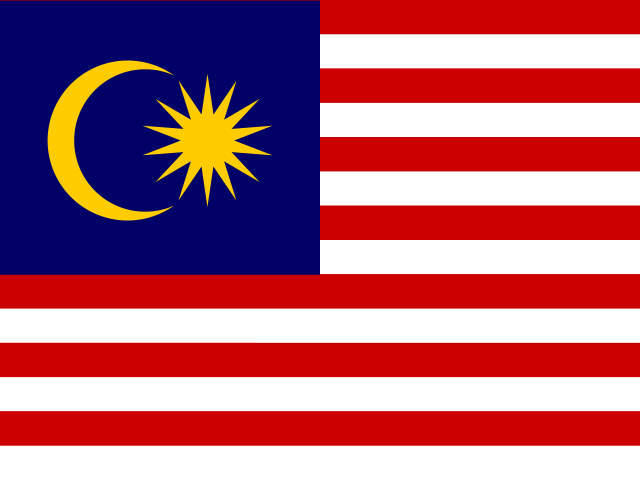
Malaysia
Malaysia offers UK and Australian branch-campus degrees at a fraction of the cost, close to India.
- Intakes
- January, May, September
- Cost
- Branch and private-campus tuition is RM 30,000-70,000/year for a Bachelor's and RM 25,000-90,000/year for a Master's (medicine higher); living costs RM 24,000-36,000/year; proof of funds around RM 30,000. A 6% service tax applies to private-university tuition from 2025. Merit scholarships are widely available. Figures indicative.
- Visa
- Non-EU students show proof of funds of around RM 30,000 for the student pass. Figures indicative.
- Language
- English is widely used and is the medium of instruction.
- Work rights
- Students may work up to 20 hours a week during breaks and holidays over 7 days. Graduates can apply for a 12-month Graduate Pass after study.

South Korea
South Korea pairs world-class tech universities and fully funded scholarships with a strong graduate job market.
- Intakes
- March, September
- Cost
- Tuition is ₩4M-8M/year for a Bachelor's and ₩5M-12M/year for a Master's (STEM/specialist higher); proof of funds around ₩20,000,000. Most universities offer 30-100% scholarships on top of the GKS (Global Korea Scholarship), which covers full tuition, a monthly stipend, flights and insurance. Figures indicative; verify per intake.
- Visa
- Non-EU students show proof of funds of around ₩20,000,000. Figures indicative; verify per intake.
- Language
- A growing range of English-taught degrees are available, especially in STEM and business.
- Work rights
- Students may work around 20 hours a week with permission and adequate grades. Graduates can use the D-10 job-seeking visa for up to 1 year to find work after graduation.

Japan
Japan offers affordable national universities, world-class engineering and a 1-year job-hunting visa.
- Intakes
- April, September/October, Rolling
- Cost
- Tuition ranges from ¥535,800 (flat rate at national universities) up to ¥1,500,000/yr, broken down as: National universities ¥535,800/yr, Public universities ¥535,800–650,000/yr, Private universities ¥800,000–1,500,000/yr, plus a one-off admission fee of ~¥282,000. Proof of funds required is ~¥2,000,000, and estimated monthly cost of living is ~¥90,000–140,000.
- Visa
- The process involves the university applying for your Certificate of Eligibility (COE), applying at the Japanese consulate with your COE, submitting required documents and photos, receiving approval and travelling to Japan, and collecting your residence card and joining the national health insurance scheme on arrival.
- Language
- For bachelor's programmes, IELTS 6.0/TOEFL is required for English-taught courses, or JLPT N2 for Japanese-taught courses, with an entrance exam (EJU) for some programmes; for master's programmes, IELTS 6.0+ or JLPT proficiency is required.
- Work rights
- Students may work 28 hours a week with a work-outside-status permit; graduates get up to 1 year to job-hunt under a Designated Activities (Job-Hunting) visa, with a skilled Work Visa route via Engineer/Specialist in Humanities status.

Cyprus
Cyprus offers English-taught, affordable EU degrees on a safe, sunny Mediterranean island.
- Intakes
- September, February
- Cost
- Private-university tuition is €7,000-12,500/year; proof of funds around €7,000/year. Figures indicative; verify per intake.
- Visa
- Non-EU students show funds for tuition and living; the university guides the student-visa application, with a temporary residence permit (pink slip) after arrival.
- Language
- Universities teach in English, with a growing international community.
- Work rights
- Students may work 20 hours a week after 6 months in eligible sectors. Graduates can apply for an employer-sponsored work permit once employed.

UAE
The UAE combines globally recognised branch-campus degrees with tax-free careers and long-term visas.
- Intakes
- September, January, May
- Cost
- Tuition ranges AED 40,000–100,000/yr (international branch-campus tuition): Undergraduate AED 40,000–75,000/yr, Postgraduate/Master's AED 55,000–100,000/yr, Foundation/diploma AED 30,000–45,000/yr. Living costs (Dubai) are AED 40,000–60,000/yr, with an estimated monthly total of ~AED 4,500–6,500. Proof of funds for the visa is ~AED 30,000. Many campuses offer merit scholarships of 10–30%.
- Visa
- The sponsoring university arranges the student visa: after offer acceptance the university sponsors the visa, the student completes a medical test and Emirates ID, receives an entry permit, and stamps a residence visa on arrival, alongside mandatory health insurance.
- Language
- English is the language of instruction across branch campuses; Bachelor's applicants need IELTS 5.5–6.5 (or equivalent) and Master's applicants need IELTS 6.0–6.5.
- Work rights
- Graduates get a 12-month post-study grace period to find work, plus a self-sponsored Green Visa (5 years) and a GPA-based Golden Visa (10 years) for outstanding graduates; part-time work during study is permitted with university/free-zone approval.
Have a student for one of these?
Submit a lead and we run the rest, end to end.